Research First India · National missions

Four proposed missions, each looking for its leader.

A mission is one national goal, split into challenges that colleges across India can own, run on shared recipes and checked twice. These four are proposals: none has started, and no lab or funder has committed yet. Each one below sets out its case: the problem, the prize, what success looks like and who it needs.

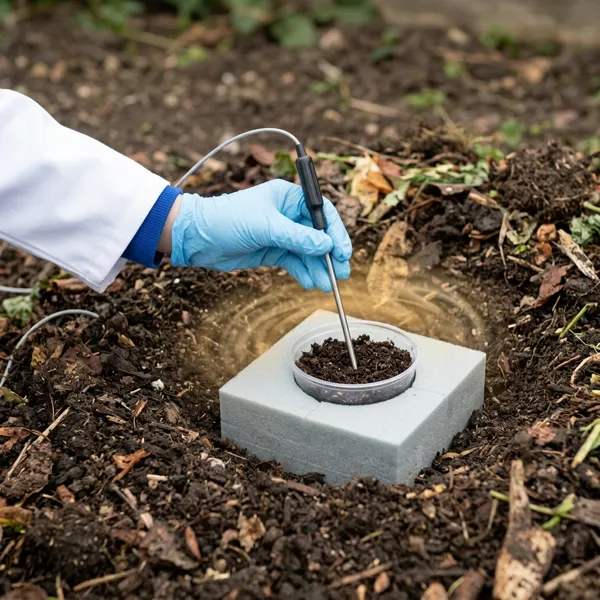
A temperature probe in soil, held by a student in a lab coat
Mission 1 · Energy · Proposed mission, lead being sought

Sodium-ion batteries from Indian salt and farm waste.

₹26,000–88,000 crorea year by about 2047 in our scenario, not a forecast. India's sodium-ion share of battery demand.

The problem

India's batteries depend on imported lithium, cobalt and graphite. Storage for two-wheelers, homes and the grid will grow many times over, and so will the import bill.

Why India can win

Sodium comes from common salt. The anode, hard carbon, can be made from bagasse, coconut shell, rice husk or cotton stalk, and every region has its own to test. The cell India needs is cheap and robust in heat, a target India can set itself.

What success looks like

  • A cell recipe made from Indian materials, repeated in several labs
  • Hard carbon from at least three regional feedstocks at battery grade
  • A pilot line with an industry partner

How the mission runs

  • About 20 challenges, from one-university to hub level
  • 40 to 50 labs, many with equipment they already own
  • 4 to 6 years as a planning assumption, against 10 to 15 the usual way

What exists today

83 labs with battery-grade instruments listed from public information (possible partners, not yet confirmed), shared recipes with locked steps and open slots, and the Stemious capture and data platform.

Mission lead wanted

A battery or materials scientist with years of electrochemistry and cell work, ready to set the target cell, write the first recipes and pick challenge leads.

Mission 2 · Land · Proposed mission, lead being sought

A Dynamic Soil Health Card for every farm, every season.

₹18,000–44,000 crorea year by about 2047 in our scenario, not a forecast. Soil models, precision advice and biofertilisers.

The problem

Soil changes every season, but most farmers get a soil test rarely, if ever. Fertiliser is applied by habit, costing farmers money, the country subsidy, and the soil its health.

Why India can win

Every district's soil is different, so the answer must be local. Colleges in every district can measure soil with simple sensors, season after season, and a district model turns those readings into plot-level advice.

What success looks like

  • Seasonal soil readings from colleges in a pilot district
  • A district soil model that gives advice farmers act on
  • Measured fertiliser savings and yield, repeated a second season

How the mission runs

  • 14.6 crore farm holdings, two cropping seasons a year
  • Agriculture and science colleges sample and test on shared recipes
  • Starts in one district, then grows district by district

What exists today

Soil, water and plant sensor recipes on Vernier instruments, soil projects across states in the research catalogue, and the digital twin method.

Mission lead wanted

A soil scientist or agronomist who knows Indian soils and extension, ready to set the sampling recipe and build the district model with data scientists.

Farm holdings: Agriculture Census 2015-16.

Mission 3 · Water · Proposed mission, lead being sought

A water and aquifer atlas, measured by colleges.

₹13,000–44,000 crorea year by about 2047 in our scenario, not a forecast. Groundwater planning and safe drinking water.

The problem

India is the largest user of groundwater in the world, and thousands of habitations drink water with arsenic or fluoride. Without measurements season by season, nobody can plan pumping, recharge or treatment.

Why India can win

Water quality and levels change from village to village, so many local measurements beat a few expensive ones. Colleges along a river basin can measure the same way, before and after every monsoon.

What success looks like

  • One river basin measured by its colleges for two years
  • An aquifer model that predicts levels and contamination
  • Low-cost treatment tested where it is needed most

How the mission runs

  • Shared sampling and testing recipes, checked by a second college
  • Pre-monsoon and post-monsoon rounds every year
  • Starts with one basin, then the next

What exists today

Water-quality sensor recipes (pH, conductivity, dissolved oxygen, turbidity, nitrate) and water projects across states in the research catalogue.

Mission lead wanted

A hydrogeologist or environmental engineer who can design a basin-wide sampling plan and work with state water departments.

6,061 habitations affected by arsenic and 4,592 by fluoride: Lok Sabha reply, 2021.

Mission 4 · Instruments · Proposed mission, lead being sought

India-made lab instruments, designed by its colleges.

₹1.1–2.6 lakh crorea year by about 2047 in our scenario, not a forecast. Indian-made instruments, open hardware and connected legacy equipment.

The problem

India imports most of its lab instruments, and every other mission on this page needs them. Benchtop instruments often sell for 20 to 38 times the cost of their materials, and imports add about 45% more.

Why India can win

The knowledge is optics, electronics, firmware and calibration, all taught in Indian colleges. Thousands of working instruments already in labs can also be connected digitally instead of replaced.

What success looks like

  • A classroom spectrophotometer designed and built in India, at a third of today's price
  • Legacy lab instruments connected to the research pipeline
  • An Indian manufacturer making and servicing them

How the mission runs

  • Physics, electronics, chemistry and computer science colleges each own a part
  • Open designs, tested in parallel and checked twice
  • 2 to 3 years to a first sellable unit, as a planning assumption

What exists today

A worked business case for the spectrophotometer, the Stemious Bluetooth capture platform, and the 12-step research pipeline. See the worked example.

Mission lead wanted

An instrumentation or optics engineer who has taken a product from prototype to manufacture, and wants to do it again with students.

Opportunity sizes are indicative annual values in India around 2047 from the Research First India opportunity analysis, at ₹88 per USD, built from published anchor figures with stated assumptions. Timelines are planning estimates. See how each was sized.

Call to participate

Lead a mission, run a challenge, or open your lab.

Scientists who lead a mission set its target, write the first recipes and decide what moves up. Faculty run a challenge with their students. Labs put their instruments on the map. Industry and funders back a mission and take its winners to market. Stemious runs the coordination, data and lab network.

  • Missions are open to scientists from universities, national labs and industry
  • A lead gives a mission a large share of their time for at least five years
  • Every contributor's runs and repeats are credited in their research record
  • Not on this list? Propose a mission from the 74 opportunities